In the provinces of Ziro and Sissili in the Nando region, 500 vulnerable women are benefiting from the support of the Girls' Education Support Project (SCOLFILLE) for the development of income-generating activities (IGAs). This is one of the levers chosen by the project to effectively involve mothers in supporting their daughters' education and, above all, to ensure the impact is sustainable. Poultry farming, small ruminant farming, pig farming, weaving, agricultural production, selling condiments and selling fruit are among the IGA supported by the project for the benefit of mothers.
The objective is clear: to generate profits to support girls« education. Action Education's message is well understood. Ms. Séni Kapema Marie, assistant treasurer of the Lorou School Council in the municipality of Bakata, says: »In addition to supporting girls, we mothers are also supported by the project. We have been trained in financial management and each of us has received funds to develop an income-generating activity of our choice. I raise pigs. The profits I will make will enable me to contribute to the children's school expenses." Also in the village of Lorou, Ms Neya Katiou, a beneficiary of the project's support, raises sheep. She too says she is engaged in this activity in the hope of supporting her children's education.
Internally displaced women in Sapouy
In Sector 4 of Sapouy, 10 internally displaced women and their daughters are among the beneficiaries of SCOLFILLE. Mrs Sawadogo Mariam is originally from Arbinda and was forced to leave her village with her family due to insecurity. Her husband chose to move to Sapouy because his older brother lived there. It is a polygamous family with five children, three of whom belong to Sawadogo Mariam and two to her co-wife. All five children attend school in Sapouy with the support of the project. Mrs. Pafadnam Mariam is also internally displaced in Sapouy with her family and also benefits from the project's support. Both women are developing income-generating activities to support their families and, above all, to contribute to their children's education. For Mrs Sawadogo Mariam, «the support provided by the project is invaluable. Thanks to the project, the children have school kits and we no longer have to pay the parents» fees. This is very important. I would like to thank everyone who brought the project to us."
Village of Togho
In the village of Togho, in the municipality of Niabouri in the province of Sissili, mothers are beneficiaries of SCOLFILLE to develop income-generating activities (IGAs). Ms Nignan Minatou receives support for growing and marketing rice and peanuts. She has just harvested her crop: seven 100-kilogramme sacks of rice and groundnuts. «Part of the harvest will be used for domestic consumption and the rest will be sold at the right time to support the family,» she said. Mrs Meda Claudine is involved in poultry farming with the exemplary support of her husband, Somda Fidèle. She has more than 150 birds. The only problem reported is an infectious attack on the farmyard. The local veterinarian was called in and began vaccinating the poultry. Meda Claudine is satisfied with the support provided by the project.
To Bozo in the municipality of Boura

Somé Martine, a weaver in Bozo and beneficiary of the project
Ms. Somé Martine and Ms. Somé Julienne are two beneficiaries of SCOLFILLE in the village of Bozo. The former is a weaver and is very satisfied with the support provided by the project. «Before the project, my children almost had to drop out of school due to lack of funds. Thanks to the project, they receive notebooks and the PTA fees are also covered. I received support to start a business and chose weaving. I learned how to weave cotton cloth from the wife of the PTA president at the school in Bozo. I have just set up a home-based business and am saving the small amount of profit I make to build a workshop shed for weaving,» says Somé Martine. She is grateful to everyone involved in the project for her choice and for supporting her children.
As for Somé Julienne, she is a widow and mother without support from her late husband's family. With the support of the project, she grows maize, peanuts and groundnuts for family consumption, and some of the produce is sold to meet her family's financial needs.
Collective AGRs
In addition to individual income-generating activities (IGAs), SCOLFILLE supports mother educators in collective IGAs that benefit schools. At the school in Yoro, mother educators opted for training in the manufacture of kabakourou soap. Ms Bonkoungou Mariam explains, «The project initially trained 16 mother educators. In turn, they trained 29 other members. Today, 45 women have been trained. We individually make soap for domestic use (laundry and dishes) and for sale. We also produce as a group, and the profits from the sale go to the school.».
At the Lon school in the municipality of Cassou, mothers who are educators have been trained to make the «koko donda» loincloth, which serves as a school uniform for pupils. The former president of the AME, Mrs Ziba Safoura, is very pleased with the training received. However, she regrets the lack of resources to purchase sufficient inputs and loincloths to make the activity more profitable.
To overcome this difficulty and ensure the sustainability of the programme, it was suggested that the women enlist the help of other parents to raise funds to purchase the materials needed to make school uniforms for the pupils.
The SCOLFILLE project has been running since 2021 in the provinces of Ziro and Sissili in Burkina Faso with financial support from the L'Occitane and Audemars-Watkins foundations. It supports 2,000 girls at school and 500 mothers with income-generating activities.

Internally displaced mothers benefiting from the AGR project

Neya Katiou sheep farm benefits from the project in Lorou
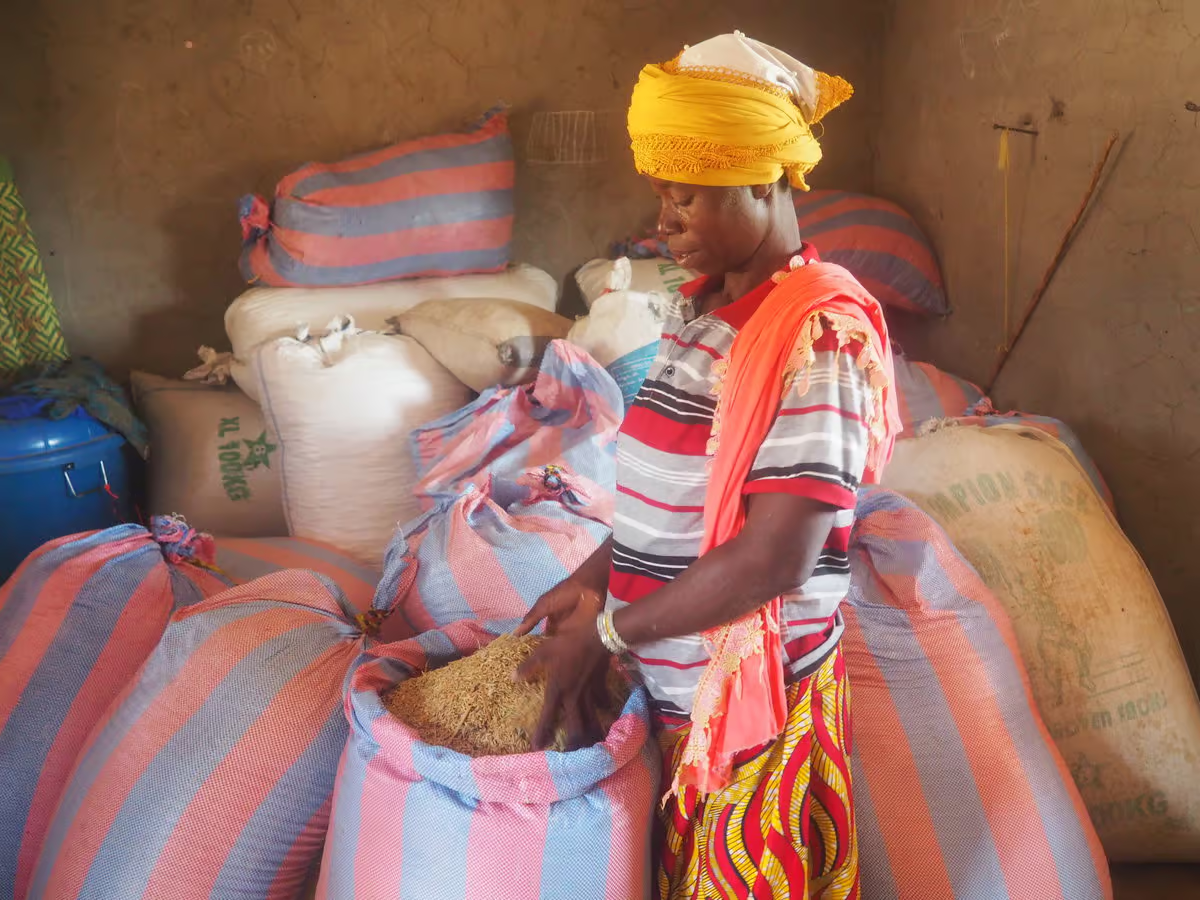
Nignan Minatou in his house storing his harvest

Séni Kapema Marie
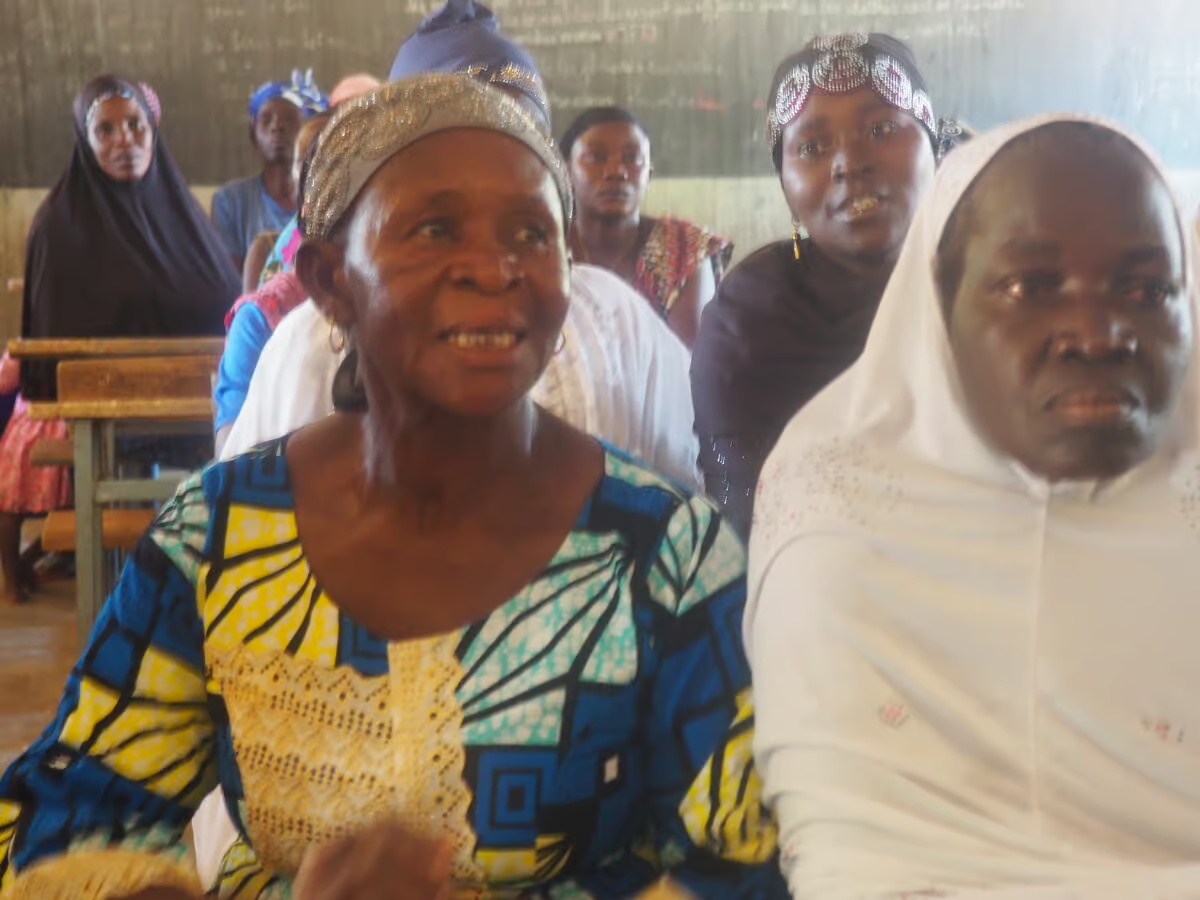
Ziba Safoura, AME chairwoman of the Lon school, on the left